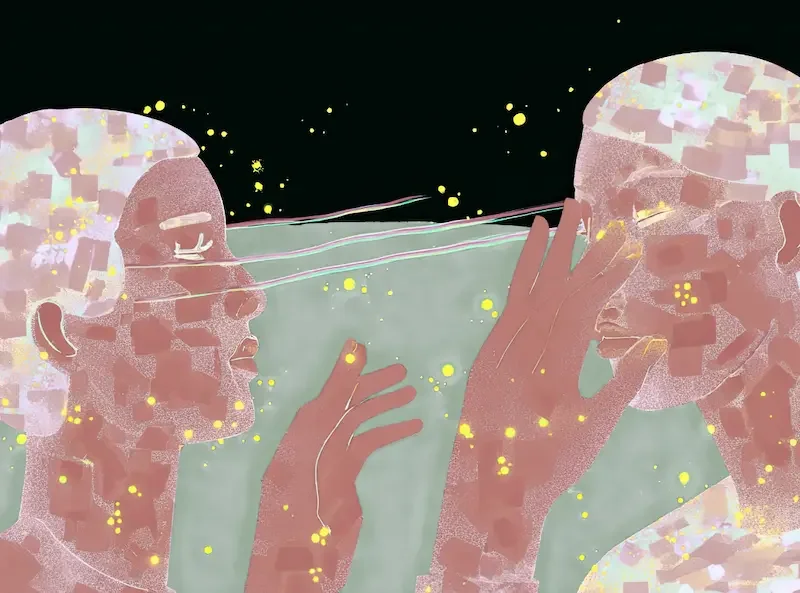
Reflecting on the growth of people turning to AI for instant answers and what this means for therapy, it’s clear to see that what’s missing is the human-to-human relational interaction. Studies on common factors within various therapies and approaches found to support beneficial therapeutic change have consistently highlighted the therapeutic relationship, regardless of what modalities are being used, as being most influential of beneficial therapeutic outcomes. From a person centred perspective the therapeutic relationship becomes so incredibly important for both client and therapist to pay attention to, especially when AI is so prevalent in our lives and on surface level seems to offer sometimes easy solutions to all sorts of issues we may be struggling or needing assistance with.
I also recognise how many people arrive to sessions feeling somewhat helpless and wanting solutions to resolve their pains with regards the things that happen in their lives, the unhelpful habits, ongoing worries that they struggle to settle, and sometimes the bad dreams or nightmares that impact on sleep and wellbeing. As a person centred psychotherapist, I recognise that the solutions are often not quick to fix, more often the healing, the growth and benefits of therapy may take time. Concerns that may appear like they should be easy to change on the surface often flow deeper and the reflective and relational therapeutic process of being seen and heard may feel somewhat intangible, like you’re trying to grasp a dream or place a specific meaning to it. In person centred psychotherapy it’s the relationship that facilitates you in accessing innate wisdom and potential to discover healing within yourself, and while AI might offer surface level solutions in some circumstances, it is unlikely to facilitate change at a deeper level.
Person centred psychotherapy starts with the assumption that you are the expert on your own life, and that the most useful thing a therapist can offer is not a technique or a theory about you, but a compassionate relationship and clear mirror in which you can see yourself and begin to sense deeper into your felt experiences.
What is person centred psychotherapy?
Person centred therapy, known as client centred therapy or Rogerian therapy, is a humanistic approach to psychotherapy. It’s considered a reflective talk therapy process that unfolds in the moment in which the client does most of the talking. The therapist aims to facilitate the therapy in a non-judgemental, curious, compassionate way, without imposing an agenda or trying to influence the process or outcome in any way.
As a person centred therapist, I recognise that you are capable and autonomous, and have the ability to resolve your own difficulties, or come to your own awareness and insights to support and realise your potential and create meaningful change. This sits in contrast to the use of AI which tends to feed answers and solutions rather than being able to notice the subtleties in the therapeutic process to reflect these back.
Where it comes from: Carl Rogers and the humanistic tradition
Person centred therapy developed from the concepts of humanistic psychology, and it is most closely associated with Carl Rogers who believed that reality is subjective and that every person as well as their worldview is unique too. Rogers considered the therapeutic relationship to support people to access their own strengths and promote self-esteem, authenticity, and actualisation. As a therapist who draws from various approaches and models, including trauma and attachment-informed, somatic, experiential, mindfulness‑oriented, transpersonal, Compassionate Inquiry, and experiential dreamwork, I can appreciate the common factors among them all and recognise my foundational approach as being person-centred.
The core conditions of the therapeutic relationship
Person centred therapy emphasises the importance of creating a therapeutic environment grounded in three core conditions. The first is unconditional positive regard, which means warmth and acceptance offered without conditions attached to it. Alongside this sit empathic understanding, the effort to grasp your experience from the inside, and congruence, the willingness to be genuine rather than hidden behind a professional mask.
These are not applied techniques but rather describe a way of being with another person which AI from a humanistic perspective is incapable of. The aim is a safe, respectful, compassionate space where you can reflect, be mirrored, heard and seen, and with curiosity explore your felt experiences and what is happening for you.
Why the relationship itself heals
I recognise that many people seeking support have been advised, corrected, or assessed far more often than they have been listened to or understood, which AI also tends to do more of. Being listened to without judgement in a human-to-human interaction creates a space wherein you can hear your own thoughts out loud, notice what you actually feel rather than what you are expected to feel, and begin to trust your personal unfolding therapeutic process.
What a session might look like
Sessions usually begin wherever you begin and follow the unfolding thread. This doesn’t mean there’s no purpose, rather, the purpose is guided by you and your intention and is something we can discuss early in our sessions to ensure I support you with your therapeutic journey.
You might talk about something that happened this week, only to discover your intention for the session halfway through, or begin to become aware that the issue goes much deeper.
You might sit with a feeling for a while, noticing what arises in your body or emotions without resolving it.
You might say the thing you’ve never said out loud before and feel the shared space can hold it.
I might reflect something back or ask a question, but the unfolding process and direction of the session stays yours as aligned to your original intention.
What person centred psychotherapy can help with
Person centred therapy is considered effective for various concerns, including situational stressors such as relationship concerns, depression, grief, and anxiety, however, is also suitable for enhancing self-esteem, personal growth and self-discovery. Because the approach is not tied to a particular protocol, it can work with whatever is brought into the space.
It suits people who are curious about their inner life and willing to be reflective, whether that be through talk or dream therapy. It suits people who want to understand themselves more, and those who may have tried more directive or clinical approaches, as well as AI, which may have targeted symptomatic relief, and those who may have found something deeper is still going on.
Person centred work with early wounds and trauma
For people carrying early emotional and attachment wounds, the qualities of this approach matter in particular. Childhood trauma often leaves a person highly attuned to other people's expectations and removed from one own inner experiences. This approach compassionately supports personal insight and awareness so that change can be made to align with greater authenticity and personal potentials.
Trauma informed practice holds the same principles and ensures safety, pacing, and consent. You are never obliged to go somewhere you do not want to go, and your pace is part of the work rather than an obstacle to it. For clients with rich inner worlds, this can sit naturally alongside dreamwork which may feel more accessible than talk therapy alone.
Starting a conversation
I’m a PACFA Registered Clinical Counsellor and Psychotherapist offering online trauma-informed counselling, psychotherapy and dreamwork to adults across Australia. I support people with early emotional and attachment wounds, stress, anxiety, overwhelm, self-doubt, life transitions, unhelpful coping patterns, and vivid dreams and nightmares, with the aim of healing inner wounds and facilitating access to meaningful, authentic change and enhanced potential.
If you’re considering reaching out, I offer a free 15 minute consultation where you can ask any questions or just get a sense of if you feel you’re comfortable engaging in a session with me.
Frequently Asked Questions
-
You do most of the talking. The therapist listens closely, does not direct the conversation and does not judge what you say. Sessions usually follow the thread you find yourself following, which can lead somewhere unexpected. The therapist may reflect something back or ask a question, but the agenda stays yours and the pace is set by what you are ready to bring.
-
No. Person centred work assumes you are the expert on your own life, and it does not require a prepared list of goals. Many people begin with something small or surface level and find their way to the real subject. What helps most is a willingness to be honest about what you notice in yourself.
-
The approach is grounded in three core conditions. The first is unconditional positive regard, meaning acceptance offered without conditions attached to it. The second is empathic understanding, the effort to grasp your experience from the inside. The third is congruence, the therapist's willingness to be genuine rather than hidden behind professional expertise. Together they create a secure, respectful space for reflection.
-
It is considered effective for people dealing with situational stressors such as relationship concerns, depression and anxiety. However, the approach is not tied to one symptom or protocol, and it can be integrated across a wide range of concerns. Person centred psychotherapy is often incorporated into practice as an overarching approach which can be integrated with various modalities and ways of working.
-
Person centred therapy is understood to harness the client's own natural self healing process. The therapeutic relationship is what makes that possible given the right conditions (unconditional positive regard, empathy, and congruence), so that people can decide on their own intention for their therapeutic journey and what they’d like to gain from the time working together and being supported by the therapist to move towards that. Techniques and modals sit secondary to the quality of the interpersonal alliance, which is described from a common factors perspective as the most important means by which change occurs.